Is Poshmark Legit? An Honest Review After 12 Years and 75+ Orders
This post contains affiliate links. My sister and I have been buying and selling on Poshmark since 2014, and her experience is quoted throughout with her blessing ;).
Yes, Poshmark is legit. It’s a real, safe marketplace where I’ve personally bought and sold, and where my sister has racked up around 50 purchases and 25 sales since 2014. Between the two of us, that’s over a decade of orders, a few hundred dollars saved on brands we love, one return case, and zero scams.
But “is Poshmark legit” is really about six different questions, and I’m going to answer all of them. Is the company real? Is it safe to buy? Does the authentication actually work? Is that “verify your account” text real? (No. We’ll get to it.) Can you sell without getting burned? And what about bags + sneakers and other fake-prone categories?
Quick answers up front, then the long version with receipts.
Is Poshmark a Legit Company?
The short, boring, reassuring answer: Poshmark was founded in 2011, went public on the Nasdaq in 2021, and was acquired by Naver (the South Korean internet giant) in 2023. Millions of people buy and sell there across the US and Canada. Scam websites do not have IPOs and audited financials. This one is real.
The more useful answer is that Poshmark being legit doesn’t mean every seller on it is. It’s a peer-to-peer marketplace, like eBay, which means you’re buying from a stranger’s closet, not from Poshmark itself. The company’s job is to build guardrails around that transaction. So the real question isn’t whether Poshmark is legit. It’s whether the guardrails work. Keep reading.
Is Poshmark Safe to Buy From? How Posh Protect Actually Works
Here’s the system, and it’s a good one: when you buy something, Poshmark takes your payment but does not give it to the seller. The money sits in limbo until your item arrives. Once it’s delivered, you have 72 hours to inspect it. If it’s not as described, damaged, counterfeit, or never shows up, you open a return case in the app with photos. If Poshmark sides with you, you get a return label and a full refund. If you accept the order, or three days pass quietly, the seller gets paid and the sale is final.
Some things worth knowing:
You can’t return something because it doesn’t fit or you changed your mind. All sales are final unless the listing was wrong. This is a big mental shift coming from regular online shopping.
Opening a case means opening a case in the app. Emailing support doesn’t count and won’t stop the 72-hour clock.
Once you tap “accept,” you cannot open a case. Inspect first, accept second.
My sister has actually used this system, so here’s her one return story: she ordered a pair of shorts listed as a certain size, and they arrived in a different size. Because the seller listed them incorrectly, Poshmark sent her a return label, she mailed them back, and got her money back. Quick and painless. The seller even apologized.
Her caveat, and I love her for this one: “My biggest fear is always that I’m going to get something with a stain I couldn’t see in the picture. The listing didn’t explicitly say there were no stains, so maybe that wouldn’t be enough for Poshmark to side with me.” She’s never had it happen in 12 years, make sure you inspect those listing photos carefully (you can also message the seller if you have specific questions). Her solution is prevention, which we’ll get to in the tips section.
My Honest Experience Buying on Poshmark

Now the fun part.
My favorite Poshmark story is a mom one. A few years ago my daughters and I had matching Ivy City Co dresses, and then my girls did what girls do and grew. Ivy City stopped selling my dress, so I couldn’t just buy the next sizes up for them. For three years running, I’ve hunted down the girls’ dresses in their new sizes on Poshmark and eBay so we can keep matching. That’s the thing Poshmark is good at: finding the discontinued thing you love in the size you need.
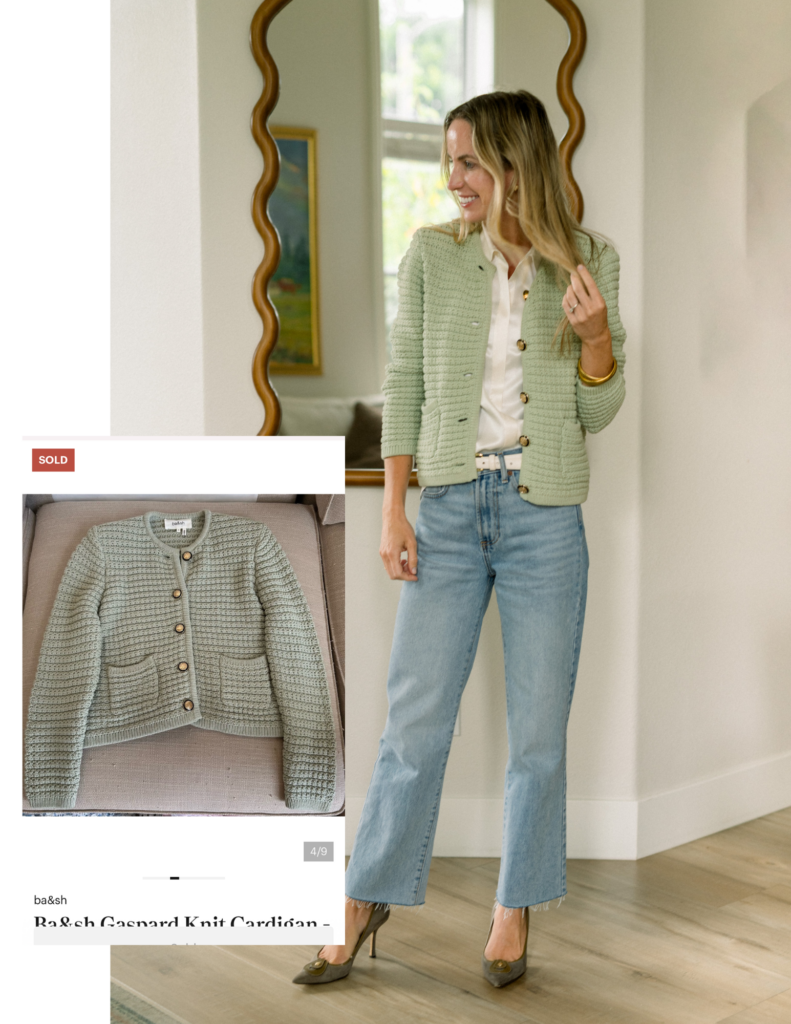
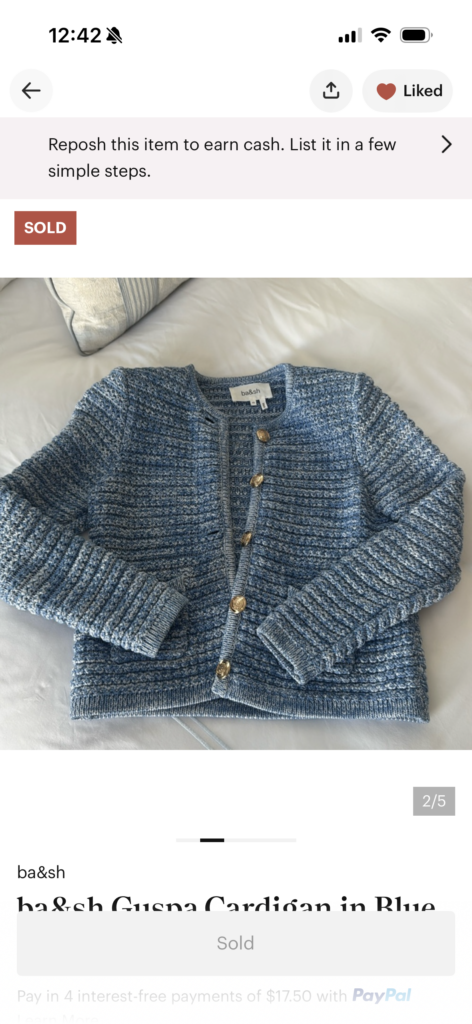
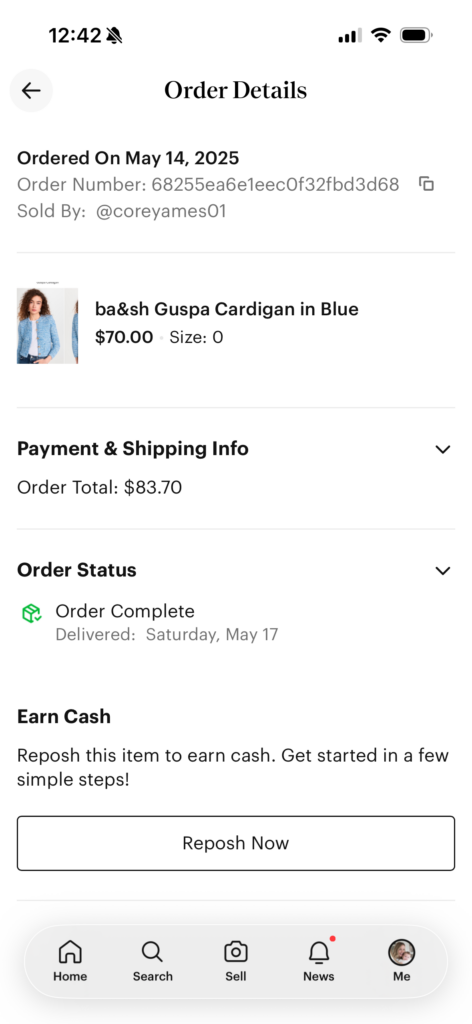
My other weakness is ba&sh. I own two of the Gaspard cardigans, one blue and one sage green, and both came from Poshmark. I paid $70 for the blue and $157 for the green. They retail for $400. Both arrived in fantastic condition, and I wear them constantly. (For what it’s worth, I’ve since seen the Gaspard go cheaper on The RealReal than what I paid for the green one, so it pays to check both (did I order it in an olive color as a reward for finally getting this post published? maybe). My TheRealReal review covers how that site works. And two weeks ago I bought Left on Friday HiHi bottoms in Dusty Rose, like new, for $35 against a $110 retail price. They’re a current style you can still buy new, so the deals aren’t limited to discontinued treasure hunting.
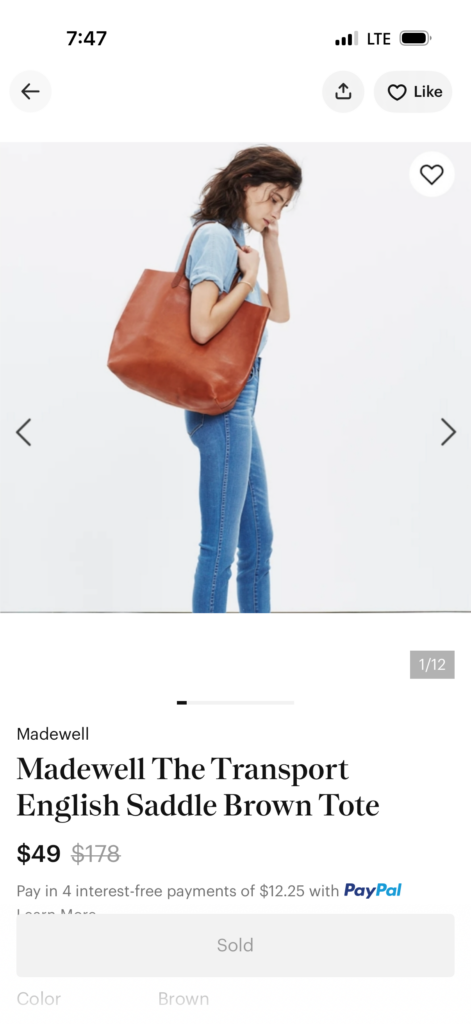
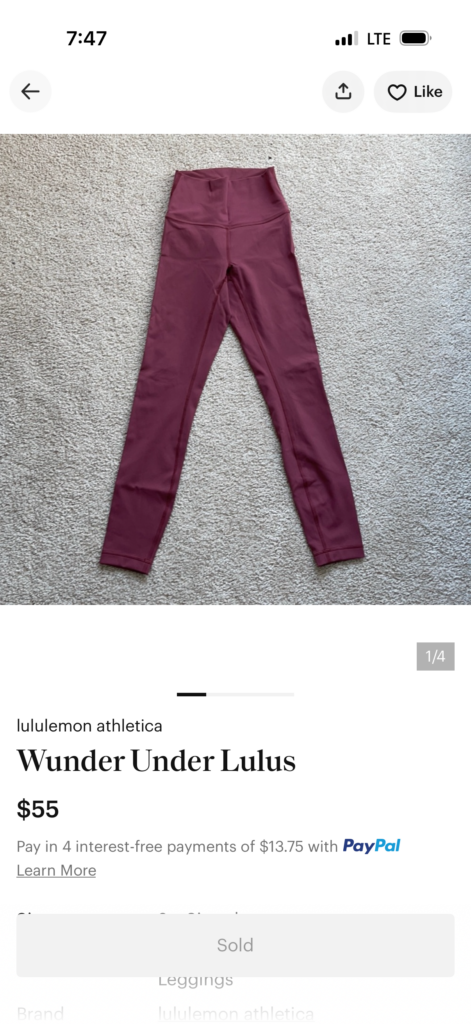
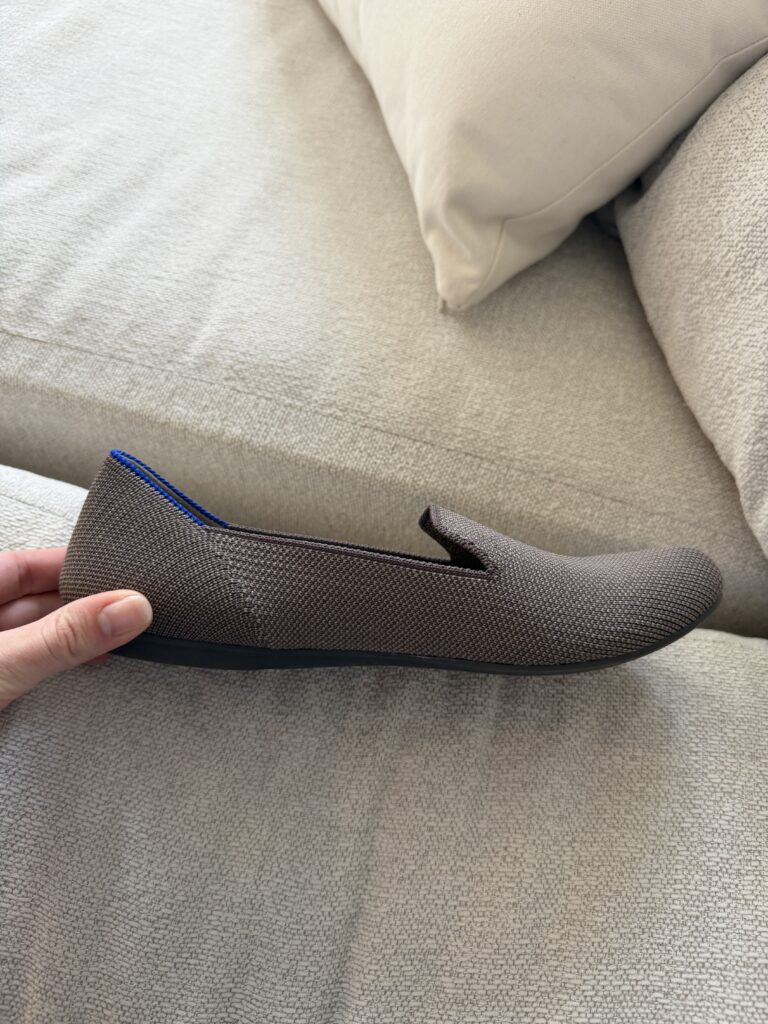
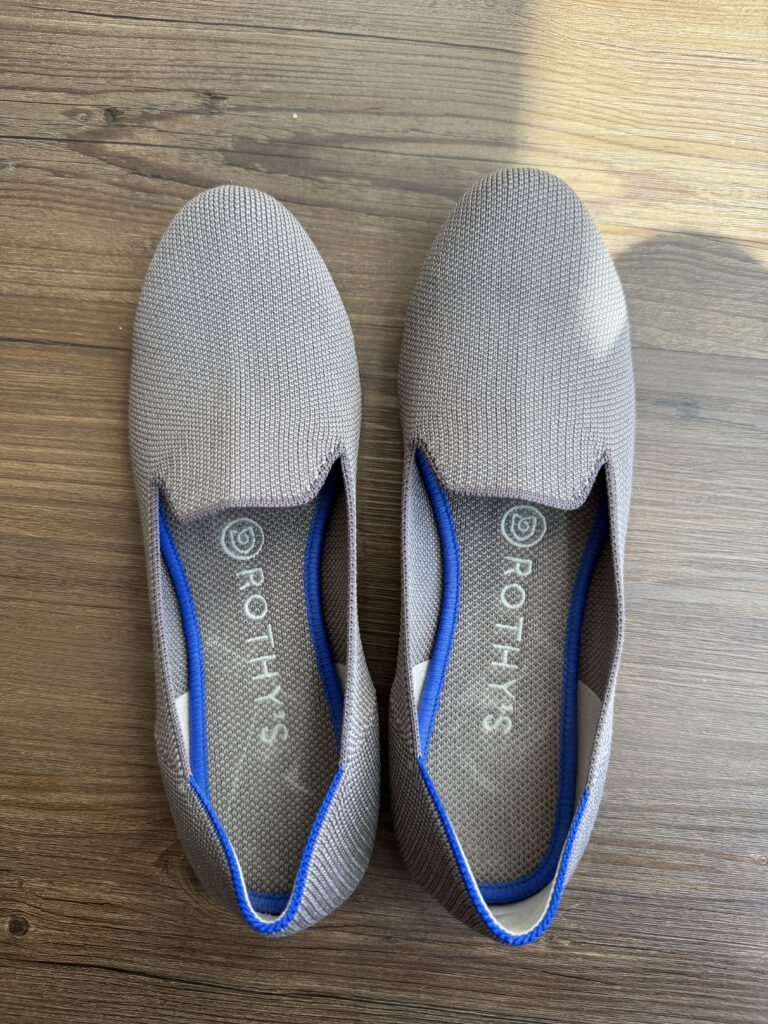
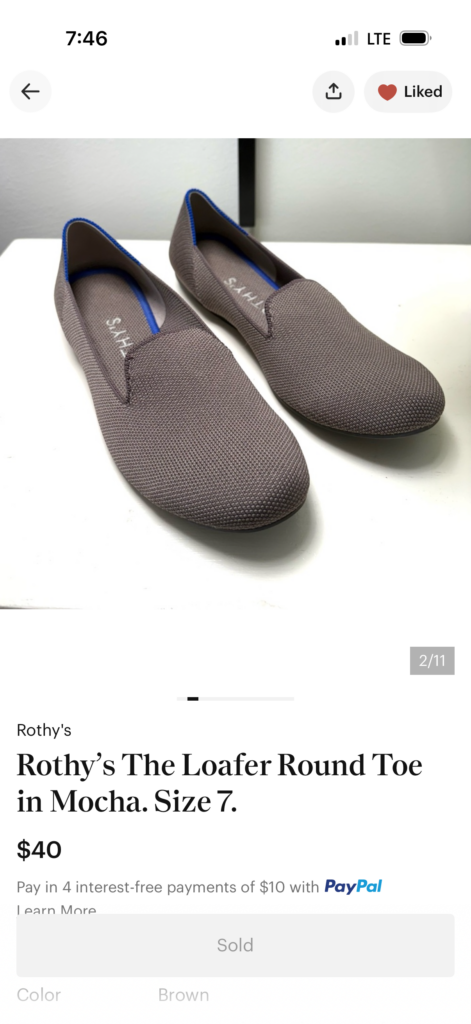
My sister’s closet tells the same story (but at a higher volume). She’s been on Poshmark since 2014, and most of her roughly 50 purchases are Lululemon: leggings and pants in the $50 to $65 range that run $120 and up new, most of them new with tags or barely worn. My theory is you have employees getting things on discount and influencers getting PR (or maybe people getting things as gifts) that they resell in new condition to make real cash. She’s added plenty of Madewell, Everlane, and recently AGOLDE jeans. Her best deal ever was a pair of Rothy’s flats for $20. Her best purchase ever, was a used Madewell Transport Tote she bought for $50 in 2022. It arrived in perfect condition and she has carried it to work every single day since. Three-plus years of daily use from a $50 secondhand bag.
One piece of hard-won honesty from her: “worn once or twice” on Poshmark usually means worn a handful of times. The sellers who are perfectly truthful about “worn once” exist, but read that phrase as “gently used” and you’ll never be disappointed. Neither of us has ever received something that felt misrepresented, but we’re both picky about which listings we’ll buy from, and I’ll share exactly how we filter later in this post.

Is Poshmark Authentication Legit?
For luxury items priced at $500 or more, Poshmark includes a free service called Posh Authenticate. Instead of shipping straight to you, the item routes through Poshmark’s team, where experts check the logos, stitching, materials, and tags before sending it on.
Full disclosure: neither my sister nor I have spent more than $500 on an item from Poshmark, so I can’t give you a personal experience of the authentication process. Our lane is everyday brands, the Lululemons and Madewells of the world, where fakes are less of an issue and a trained eye isn’t required. When I buy designer, I usually go through The RealReal instead, where every single item is authenticated regardless of price (and I’m spending well under $500 per item, even if its designer).
Is That “Verify Your Poshmark Account” Text Real? (No.)
If you found this post because you got a text or email asking you to verify your Poshmark account, claim a reward, or confirm your information through a link: it’s a phishing scam. Delete it. Poshmark will never ask you to verify your account, accept payment, or resolve a problem through an outside link, a text, or an email reply. Some of these scams get creative, hosting fake “security” pages on lookalike domains or even Notion pages, but the tell is always the same: they want you to click away from the actual Poshmark app.
Inside the app, the scams are almost endearingly obvious. My sister’s take after 12 years: “You could definitely get scam comments occasionally that say things like ’email me,’ but it’s always very obvious what’s happening. Poshmark monitors anything about emails or texts very closely and those comments get taken down quickly.” She also flagged the flip side, which sellers need to know: if you engage with off-platform requests, you can get kicked off Poshmark yourself.
The rule that covers every scam on every resale platform: the moment money or conversation leaves the app, so does your protection. Posh Protect explicitly does not cover off-platform transactions. Someone offering to pay you through Venmo, Zelle, or Cash App is not offering you convenience. They’re removing your safety net.

Is Poshmark Legit for Sellers?
Yes, and it’s genuinely low-effort, which is why both of us have used it despite neither of us being a “reseller.”
Here’s the process, courtesy of my sister, who has sold about 25 items: you photograph the item, create the listing (the app now has AI that will auto-fill the category, color, and description, though she recommends writing your own description because the AI ones are mediocre), and set your price plus a hidden minimum you’re willing to accept. Then the app does something kind of great: it negotiates for you. When someone likes your listing, Poshmark automatically sends them offers and haggles them down toward your floor so you don’t have to play the counteroffer game manually.
When something sells, you get a prepaid shipping label by email, package the item in literally anything, and drop it in any blue USPS box. You have a week to ship or the sale cancels. That’s the whole job.
Fees, stated plainly: Poshmark takes a flat $2.95 on sales under $15 and 20% on sales of $15 and up. (They briefly tried a different structure in 2024 and reversed it within a month after sellers revolted, so 20% it remains.)
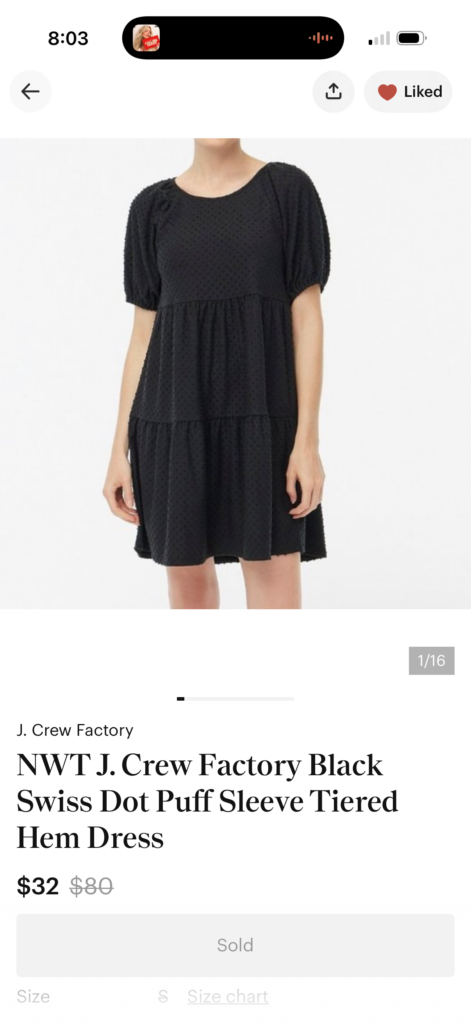
I sold a few maternity gowns I’d worn to special events while pregnant, and at the time the fees didn’t feel steep for what I got: real money for dresses I’d never wear again, with almost no effort. You take home far more than you would selling the same items through ThredUp, where payouts are famously tiny (my ThredUp review gets into that comparison).
My sister’s honest read on the selling side: it’s easy to list, harder to sell unless you’re a little dedicated. Recognizable brands move fast. She’s sold Abercrombie, Lululemon, and Quince, and the Quince surprised her: “even though it’s not very expensive, it’s so trendy that people are searching for it.” Less recognizable brands sit. The committed sellers relist frequently, share to Posh Parties, and use pricing tools. She just lists things when she’s cleaning out her closet, reduces prices when she happens to be in the app, and donates whatever doesn’t sell after a few months. Both approaches are valid; just know which seller you are.
How to Tell if a Poshmark Buyer Is Legit
The seller-side risks are smaller but real. The main ones: a dishonest buyer filing a false “not as described” claim, and the off-app payment request, which you now know to ignore. The defense for the first one is boring and effective: photograph your item thoroughly before you ship it, including tags and any flaws, and keep the photos. If a dispute happens, Poshmark reviews photo evidence from both sides, and the seller with documentation usually wins. For higher-value pieces, this matters even more, which is one reason my sister and I both agree that big-ticket items belong elsewhere. More on that in the downsides.
How to Tell if a Poshmark Seller Is Legit
This is my sister’s actual pre-purchase checklist, refined over 12 years and zero bad orders:
Check the seller’s ratings, their other sold items, and their ship times. A seller with hundreds of sales and consistent reviews is a fundamentally different risk than a brand-new account.
Only buy listings with clear, plentiful photos. She won’t touch a listing with blurry pictures or missing sizing information, full stop.
Ask to see the size tag. After her one wrong-size return, she now favors listings where the tag is visible in the photos.
Watch for the classic red flags: stock photos instead of real ones, prices that seem impossible, the same item listed by multiple accounts, and empty accounts with no history.
Prefer “new with tags” or “gently used.” Her rule: things listed as very gently used have consistently arrived exactly that way.
Which Items Are Riskier for Fakes?
Sneakers, sports jerseys, and hype brands like Supreme and Yeezy are the counterfeit magnets of the resale world, on Poshmark and everywhere else. Remember that authentication only kicks in at $500, and most fakes in these categories are priced below it, on purpose. If you’re shopping these categories, seller history and photo scrutiny are really important (or just skip these altogether).
The Honest Downsides
Okay, lets share the not so shiny parts.
The fees cap what’s worth selling. Twenty percent on a $50 sweater is fine. Twenty percent on a $400 dress is $80, and at that point my sister says: “I’d try Facebook Marketplace, or maybe venture into something like The RealReal.” Poshmark is for the middle of your closet, not the top of it.
The in-app search is not great. Finding a specific item through Poshmark’s own search is harder than it should be. (There’s a workaround. It’s in the tips. It’s my favorite tip.)
Disputes lean toward buyers. Sellers of pricier items sometimes report chargebacks or item swaps even when they did everything right, which is one more reason to keep your high-value pieces off the platform.
Selling takes hustle if you want volume. The passive approach works for closet cleanouts. It does not work if you’re trying to build income.

My Best Tips for Shopping Poshmark
Buy what you already know. This is my sister’s number one rule and mine too. She finds a Lululemon style that fits perfectly at the store, then buys every subsequent pair on Poshmark. Since you can’t return for fit, familiarity is your return policy.
Search on Google, not in the app. Her genius workaround for Poshmark’s clunky search: Google “Lululemon Scuba hoodie brown Poshmark size small” and let Google find the exact listings, then click through. It works dramatically better than searching inside the app.
Try it on in-store first. If you’re eyeing something current, try it on at the mall (do we still go to malls these days?), then buy it secondhand.
Read “worn once” as “worn a few times.” Calibrate expectations and you’ll only ever be pleasantly surprised. Generally expect people to slightly over-promise.
Inspect the moment it arrives. Your 72-hour window starts at delivery, not at “whenever I get around to opening the package.”
Poshmark vs. Other Resale Sites
The simplest way to sort the resale world: Poshmark and Mercari are peer-to-peer, meaning you keep your item until it sells and ship it yourself, while ThredUp and The RealReal are consignment, meaning you send everything in and they handle it. My sister has used Mercari and says it functions almost identically to Poshmark. Also, apparently ThredUp has added a peer-to-peer consignment option but I haven’t shopped/sold that yet.
When I want the best payout for mainstream brands with minimal effort, it’s Poshmark. When I’m offloading a big bag of kids’ clothes I’d otherwise donate, it’s ThredUp. When I’m buying or selling actual designer, it’s The Real Real, because everything gets authenticated.
One note for Canadian readers: Poshmark operates a legitimate, full version of the platform in Canada, with the same protections.
Bottom Line: Is Poshmark Worth It?
Poshmark is legit, safe, and worth it, with the same caveat that applies to any marketplace: the platform protects you exactly as far as you stay on it. Buy through the app, vet your sellers, inspect within three days, and never follow anyone to Venmo or a “verification” link.
For buying, it’s the best place I know to find discontinued pieces you love and everyday premium brands at half price or better. For selling, it’s the highest-payout, lowest-effort option for the recognizable brands in your closet, as long as you’re not selling anything so expensive that the 20% stings.
Twelve years, 75-plus orders between us, one easy return, zero regrets. That’s about as legit as resale gets.
Poshmark FAQ
Yes. Poshmark was founded in 2011, went public on the Nasdaq in 2021, and was acquired by Naver in 2023. It’s a real, established marketplace with millions of active buyers and sellers in the US and Canada.
Yes, as long as you pay through the app. Posh Protect holds your payment until you receive the item, and you have 72 hours after delivery to open a case if it arrives damaged, counterfeit, or not as described.
It’s possible, but nearly every Poshmark scam involves leaving the platform: fake “verify your account” texts, phishing links, or requests to pay through Venmo or Zelle. Stay in the app and the protections hold. In 12 years, my sister has never been scammed.
Yes. Posh Authenticate is a real, free service for items priced $500 and up, where Poshmark’s experts inspect the item before it ships to you. Items under $500 are not authenticated, so vet those sellers yourself.
No. They’re phishing scams designed to steal your login. Poshmark never asks you to verify your account or claim rewards through outside links. Delete the message and don’t click anything.
The platform is legit, but sneakers and hype brands are the highest-fake-risk categories anywhere in resale, and authentication only applies over $500. Check seller history carefully, or use an authentication-first platform like StockX for sneakers.
Yes. Poshmark holds the buyer’s payment, provides your prepaid shipping label, and releases your money after the buyer accepts. Fees are $2.95 under $15 and 20% at $15 and up.
Check their ratings, sold history, and ship times, and only buy from listings with clear photos and full sizing details. Avoid stock photos, too-good prices, and brand-new empty accounts.
Only if it arrives not as described, damaged, or counterfeit, and only if you open a case in the app within 72 hours of delivery. Wrong fit and buyer’s remorse are not covered; all other sales are final.
They work almost identically as peer-to-peer apps where you keep items until they sell. Poshmark is more fashion-focused with a bigger buyer pool for clothing; Mercari is broader. My sister has used both and found the experience very similar.
Yes. Poshmark runs a full Canadian version of the platform with the same buyer protections.
Want more real-world resale reviews? Read my honest takes on The Real Real, Thred Up, and What Goes Around Comes Around.